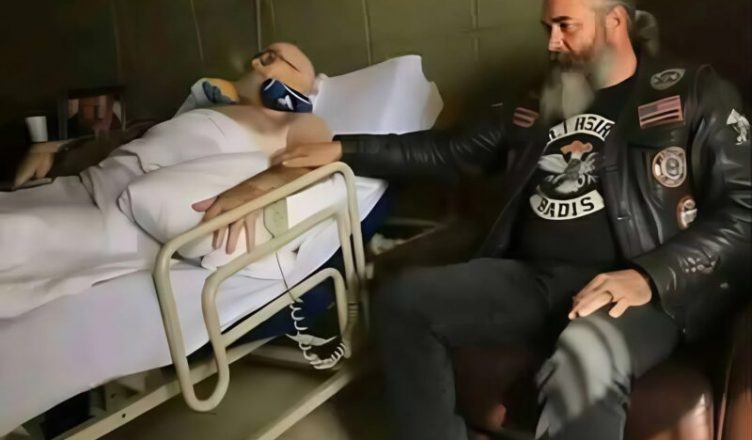
Six months — that’s how long my three children managed to stay “too busy” to visit. Six months of birthdays missed, holidays ignored, guilt pushed aside.
I wasn’t angry anymore. Just tired.
Bone-deep tired.
Then the door swung open, and a tattooed biker stepped inside like he’d taken a wrong turn in life and somehow ended up in my room.
He froze when he saw the Military Cross on my bedside table. His expression changed — not pity, not curiosity… recognition. The kind you see in someone who’s carried his own ghosts for far too long.
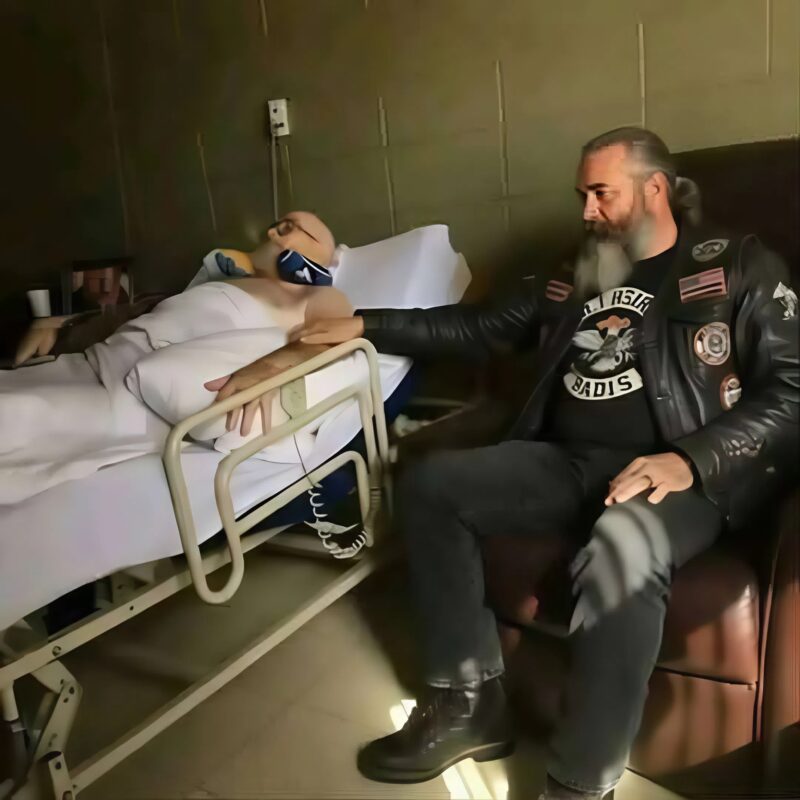
He didn’t walk away.
He didn’t apologize.
He took three steps toward me and said, “How you doin’, brother?”
Nobody had called me brother in years.
Something cracked inside me, and words started spilling out — stories from the war, losses I never spoke of, the slow and quiet way my children drifted out of my life like I was a chapter they’d grown bored of.
He listened with that stillness only men who’ve known real violence somehow learn. No fake sympathy. No clichés. Just presence.
When I finished, when the room felt too heavy to breathe in, he leaned closer and said:
“I can’t force them to love you… but I can damn sure make them face what they’ve been avoiding. You good with that?”
I didn’t trust my voice, so I nodded.
And for the first time in months — hell, maybe years — my mouth remembered how to smile.
He came back the next day, and the next.
Soon everyone in the building knew him — the giant on a Harley who sat quietly with the dying vet. Nurses baked him cookies. Patients greeted him like he was some wandering saint who’d taken a detour through hell.
He wasn’t.
He was just a man who’d lost something he couldn’t get back.
One night he looked at me and asked:
“You want them to feel it? The regret?”
Not revenge, not punishment — regret.
The kind that keeps people awake at 3 a.m.
“Yes,” I said. “I want them to remember me while I’m still here.”
He nodded once — the kind of nod that meant he already had a plan.
The next morning my room turned into a storm.
My daughter ran in first, crying so hard she couldn’t breathe. My middle son kept saying “Dad, why didn’t you tell us?” over and over like a broken record. The youngest stood frozen at the wall, staring at me as if he were seeing me for the first time — not as “Dad who’ll always be around,” but as a man slipping away.
“Dad… are you really this sick?” my daughter whispered.
“I’ve been this sick for months,” I said softly. “You just didn’t come.”
Their faces fell apart.
Regret hit them like a wrecking ball.
And in the corner, like he belonged there, sat the biker — calm, arms crossed, watching.
He stood, looked straight at my children, and said:
“He didn’t need your money. He didn’t need your excuses. He needed you. If you’re gonna show up, then show up now. Before it’s too late.”
He didn’t wait for thanks.
He didn’t wait for anything.
He walked out the door, heavy boots echoing down the hallway.
Later the nurse told me how he did it.
He sent them photos.
Not dramatic, not staged — real.
My hands, thin and trembling.
My face, drained from chemo.
My Military Cross lying beside me like the last truth I owned.
And under the photos he wrote:
“He’s still here. For now.”