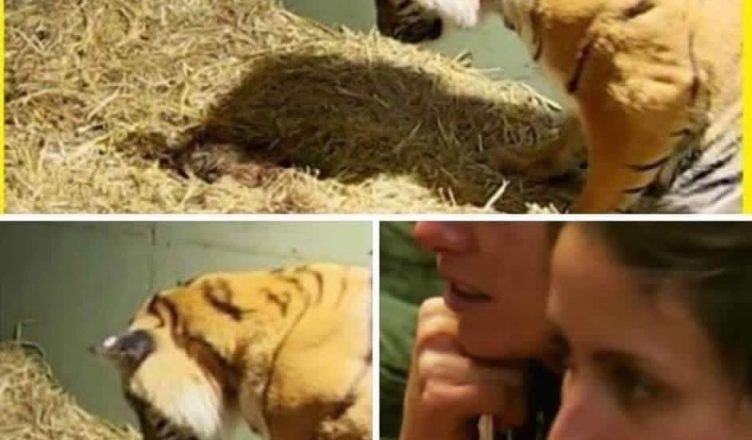
The day began in a cool haze of early morning mist, soft light brushing against the steel enclosures. In the den lay the tigress, poised and powerful even in stillness — and beside her, two tiny cubs who looked utterly lifeless.
The keepers, seasoned professionals who had witnessed their share of wonders and tragedies, stood frozen behind the glass. One murmured, almost gently: “No heartbeat… no response.” Another just sighed and lowered his head. It was her first litter — they had prepared for excitement, not a moment of loss.
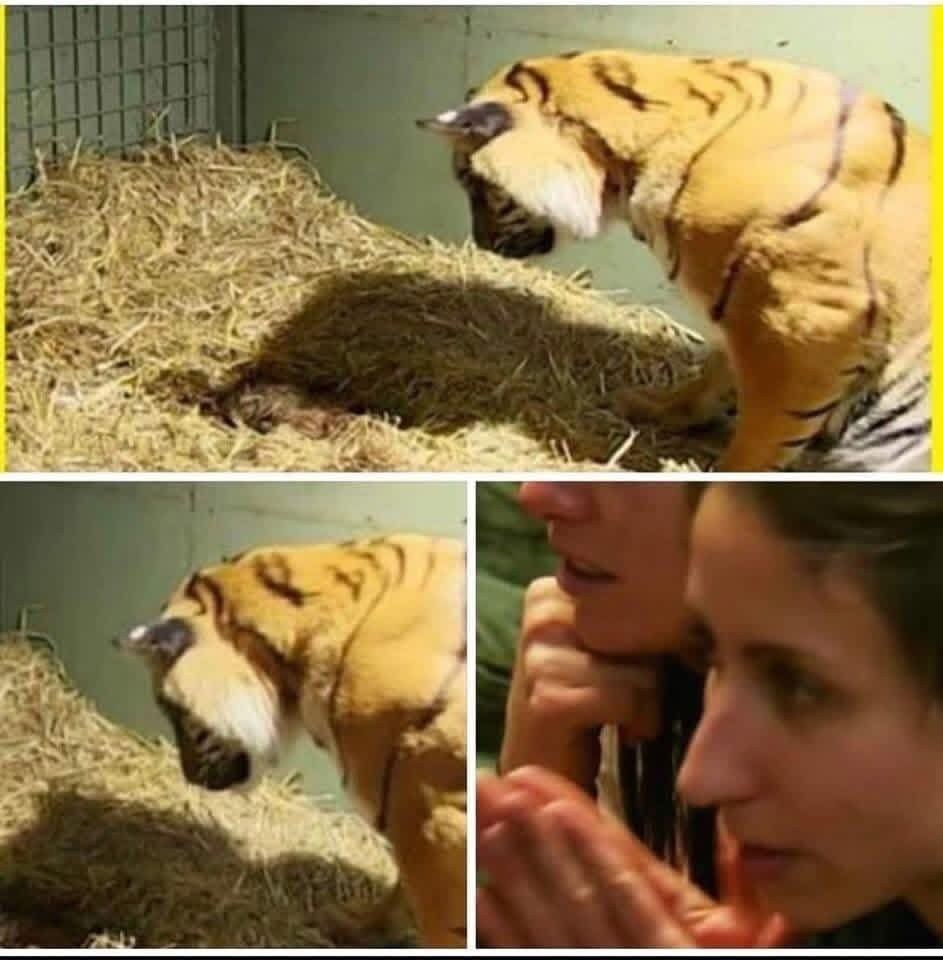
The tigress nudged one cub with her nose. Then the other. No flicker of movement. No breath. The sound she let out then was low, heavy, and full of sorrow — a sound that cut through the stillness and made even the humans fall silent. It wasn’t simply the cry of an animal. It was grief.
But the tigress refused to surrender.
She began licking the cubs — not mechanically, but with focused determination, as if urging them back from the edge. The keepers hesitated to intervene, then stepped back. They understood something important: instinct sometimes goes deeper than human judgment.
Minutes stretched unbearably. And then — a faint inhalation. A small twitch of a paw. A moment later, the second cub fluttered in its mother’s embrace, tiny chest beginning to rise.
A keeper whispered: “They’re responding…” Another let out an involuntary gasp.
The tigress didn’t pause. She gathered them closer, warming them, stimulating them, pushing life back into their fragile bodies. And then it happened — a thin, wavering squeak from one cub… followed by a louder cry from the other.
The tigress lifted her head, and in those golden eyes flashed something ancient and fierce: “My cubs live.”
Later examinations confirmed what the mother already knew. Some tiger cubs are born in an ultra-weak state — with minimal breathing and almost no reflexes — and sometimes only the mother’s persistent stimulation is strong enough to pull them back.
But the lesson wasn’t merely medical.
Days passed, and soon the cubs were bumping against their mother with clumsy affection. A month later, they were padding around the enclosure, bold but unsteady. Two months later, they were already trying out tiny growls in harmony with hers.
And the keepers, who stood witness to the entire transformation, now share a quiet truth: when people think hope has vanished, a mother can prove them wrong.
This story is about more than animals. It reminds us that sometimes life returns not through intervention or analysis — but through warmth, instinct, and unwavering love.